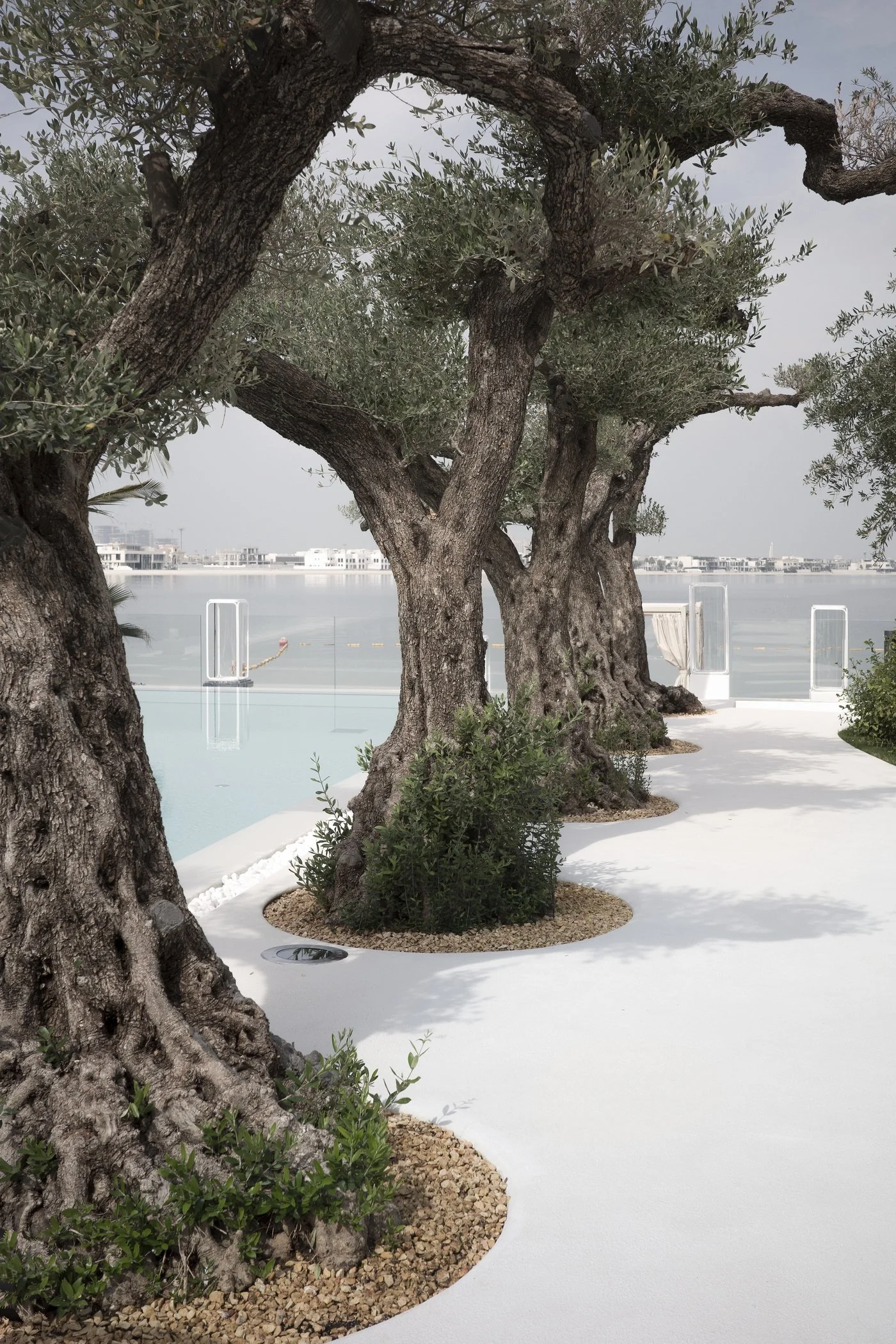
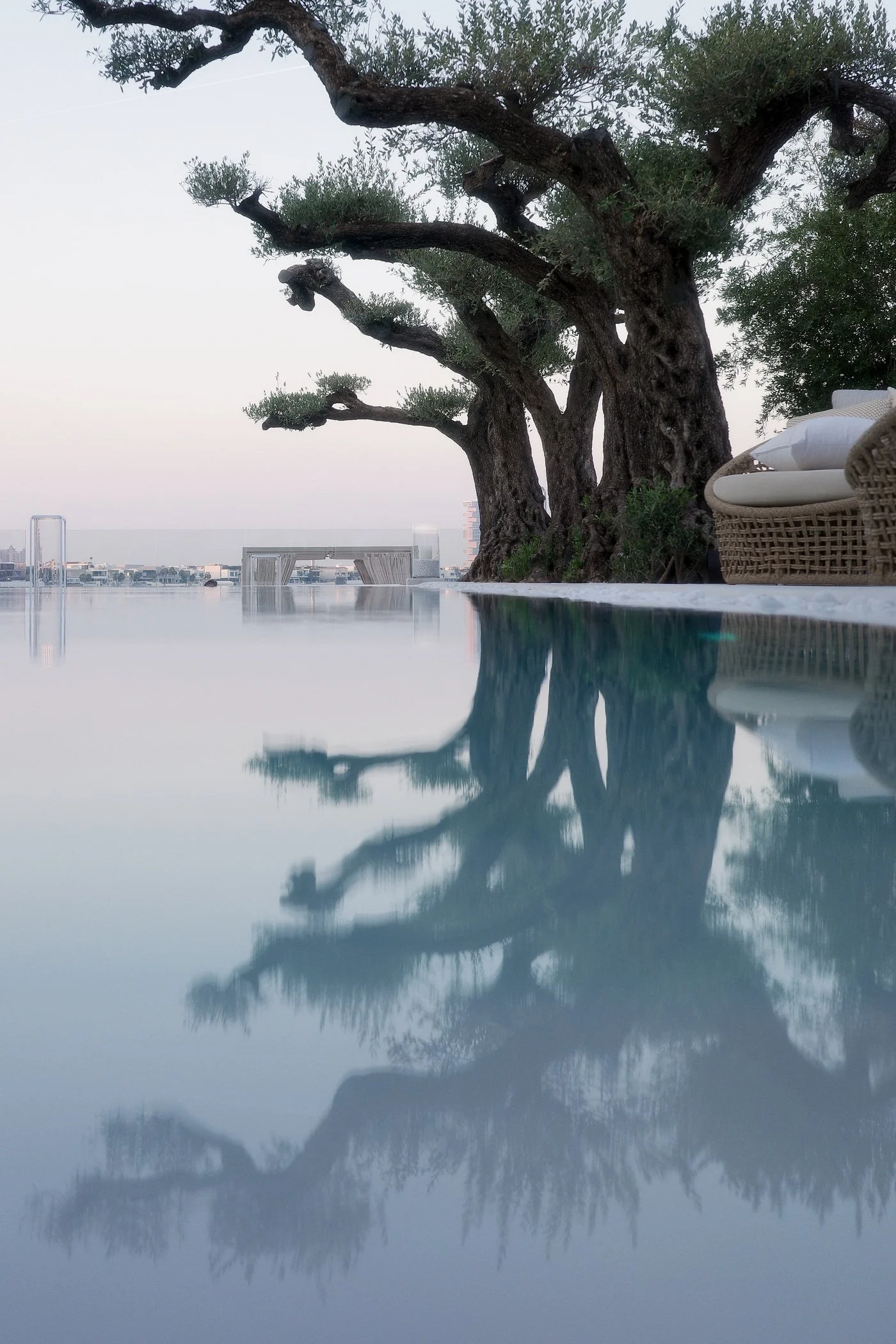
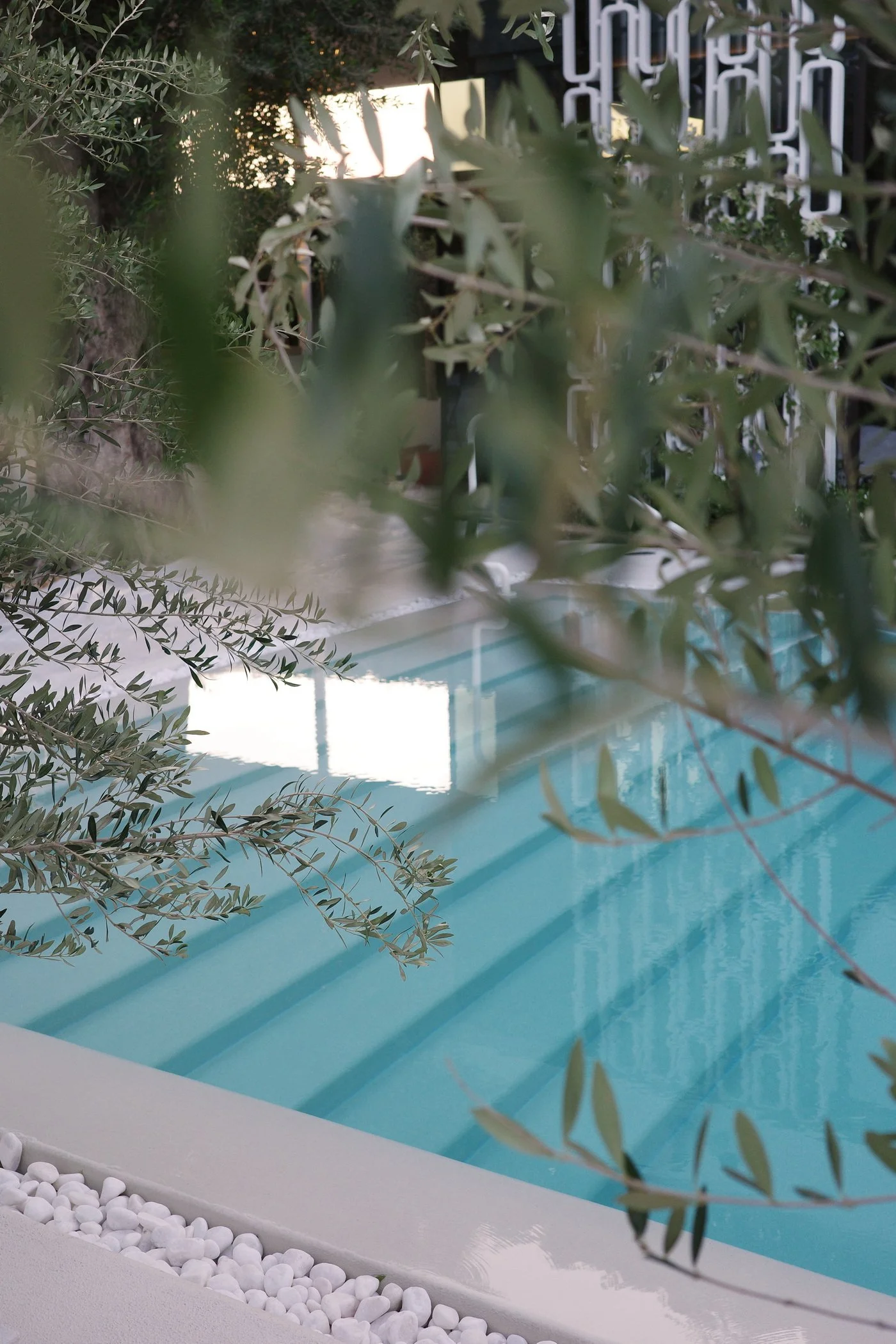
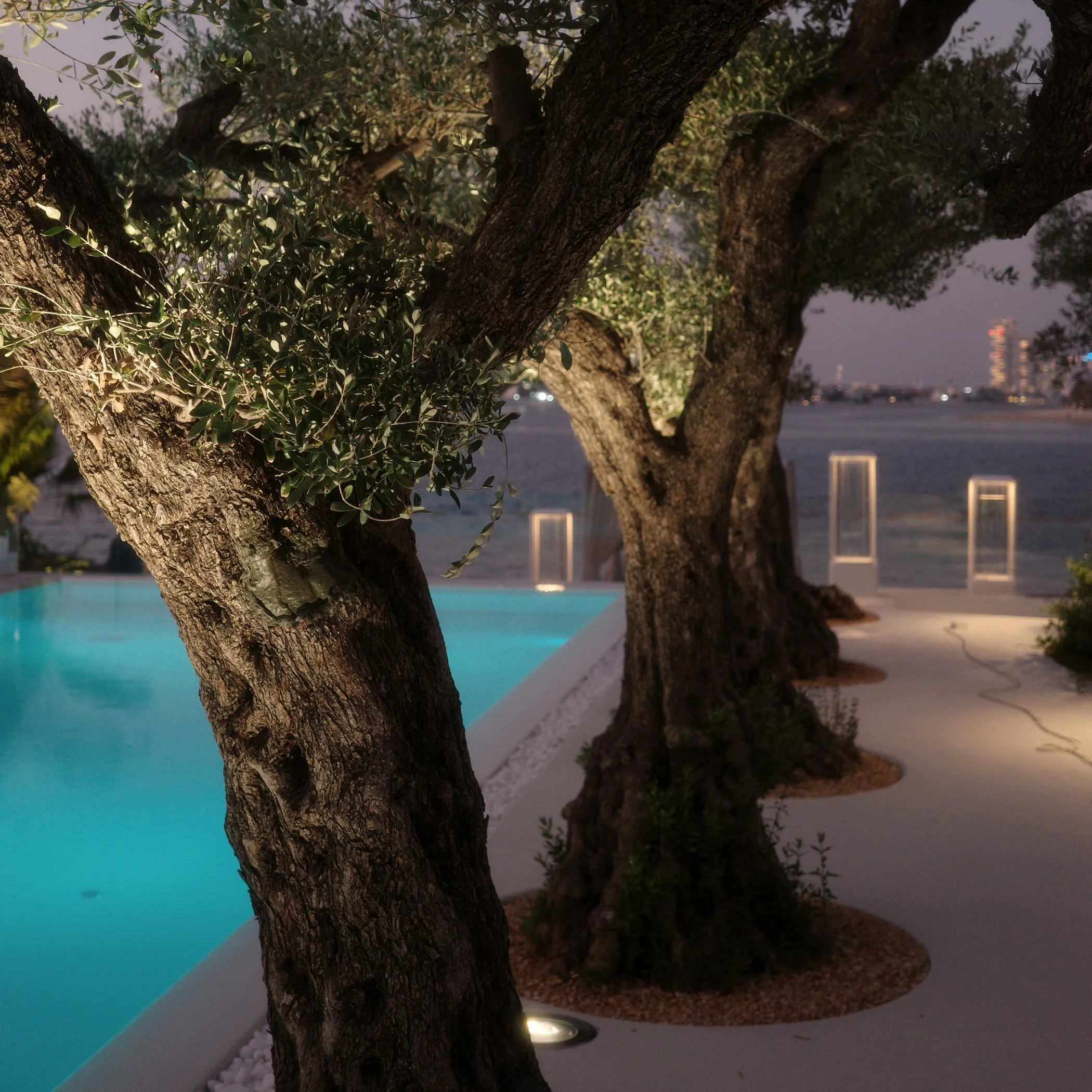
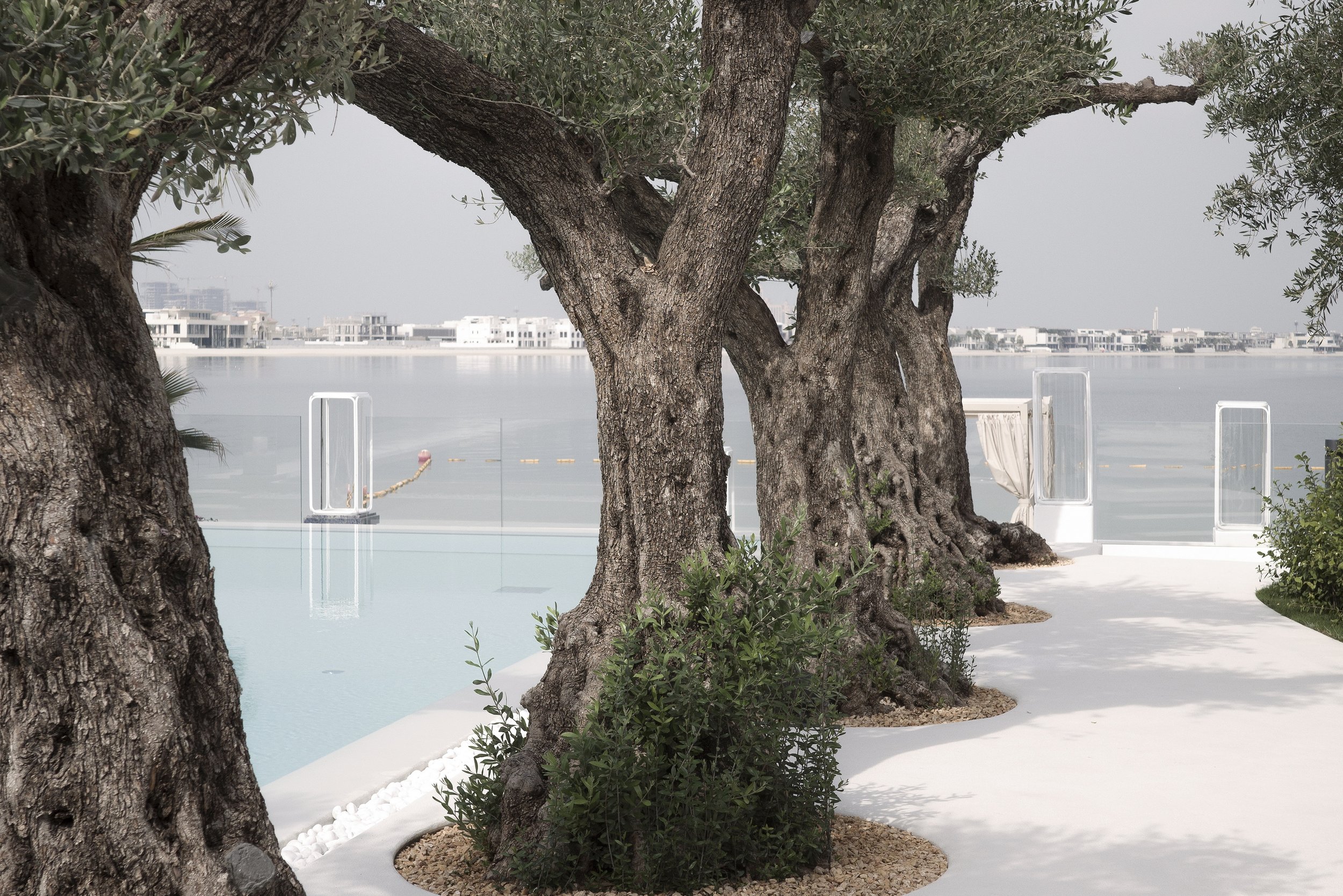
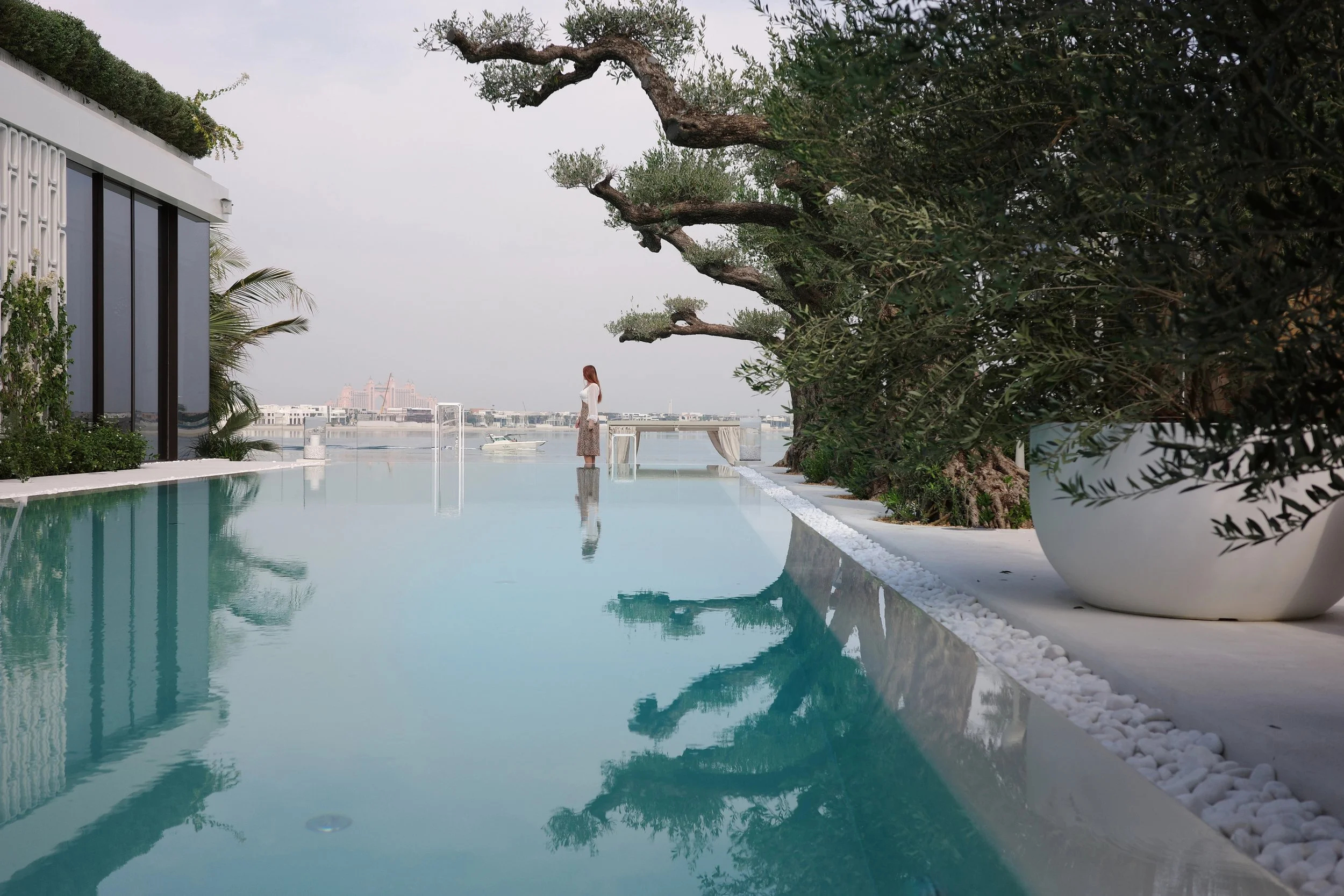
Olive trees with broad, spreading canopies are planted along the pool. They cast a soft shade over the water — particularly valuable in Dubai’s hot climate — while their silhouettes are reflected in the mirror-like surface.
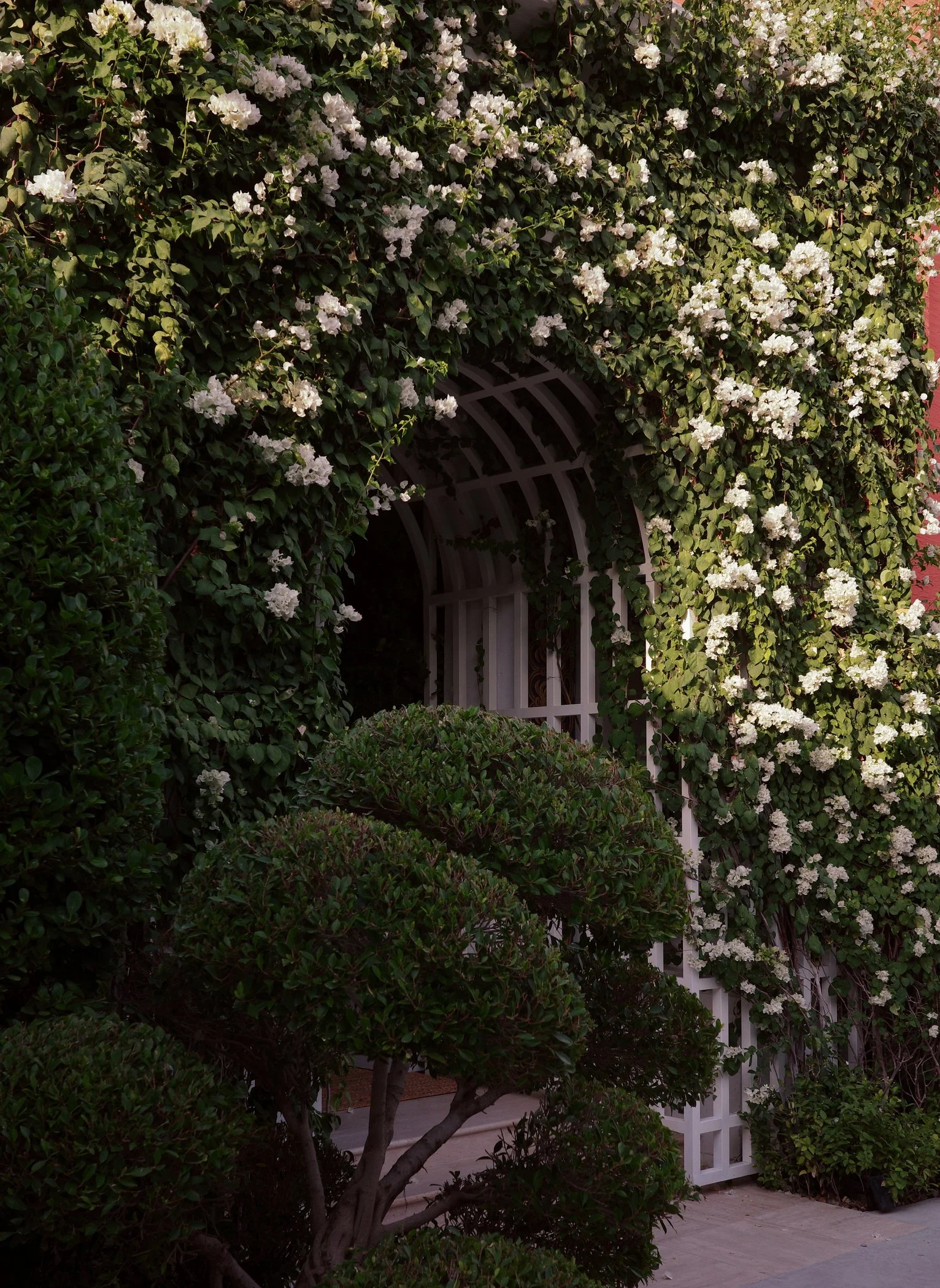
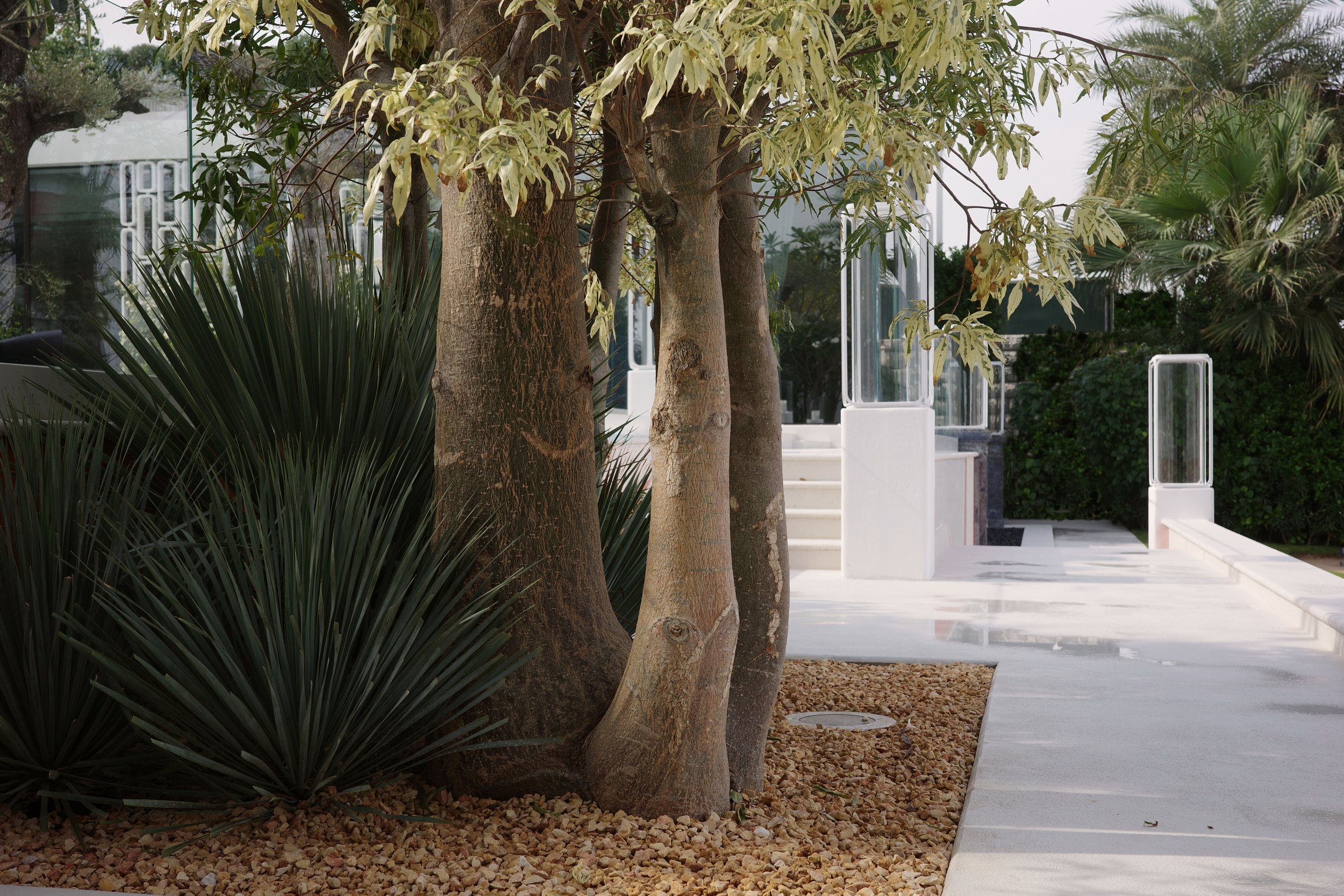
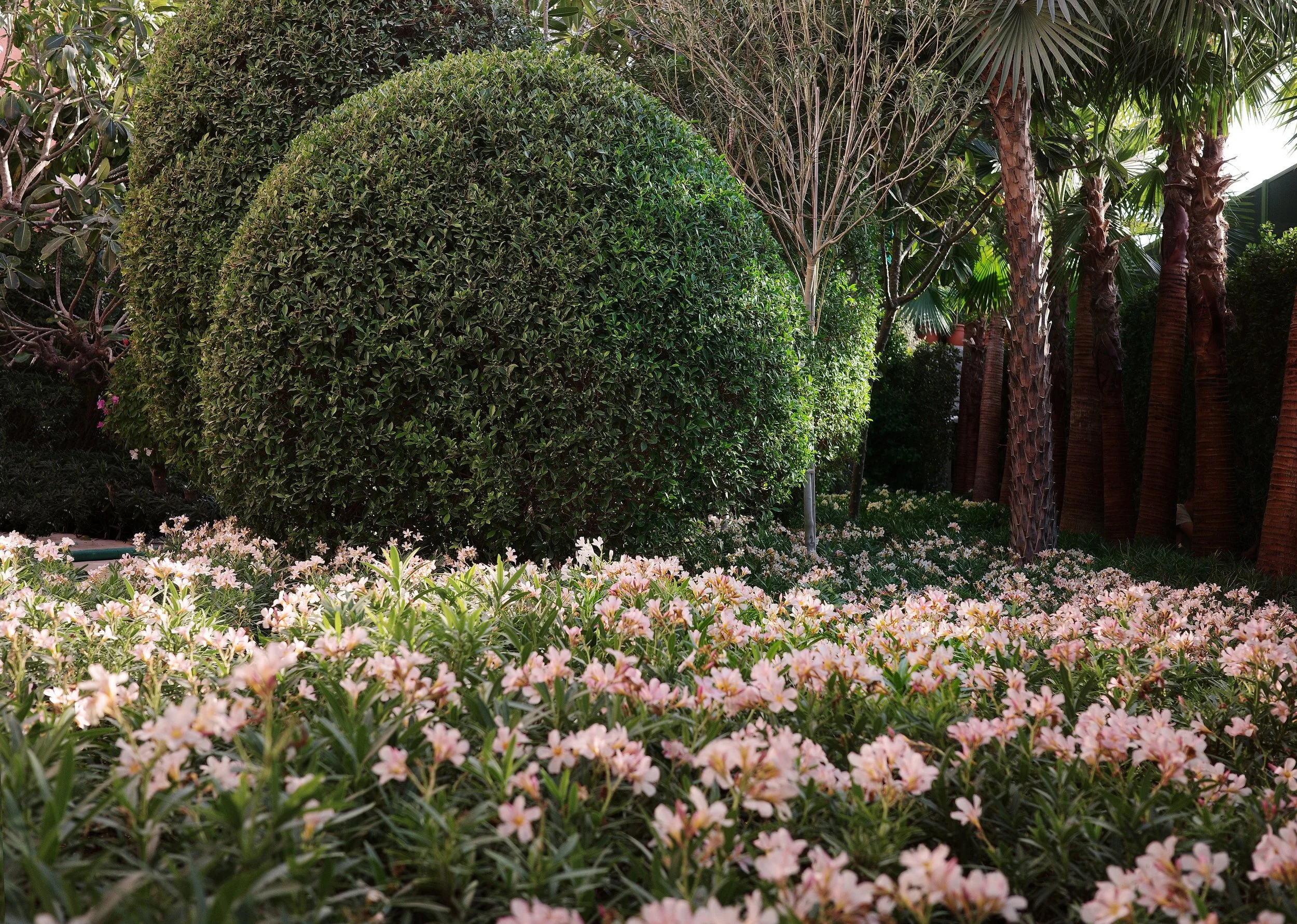
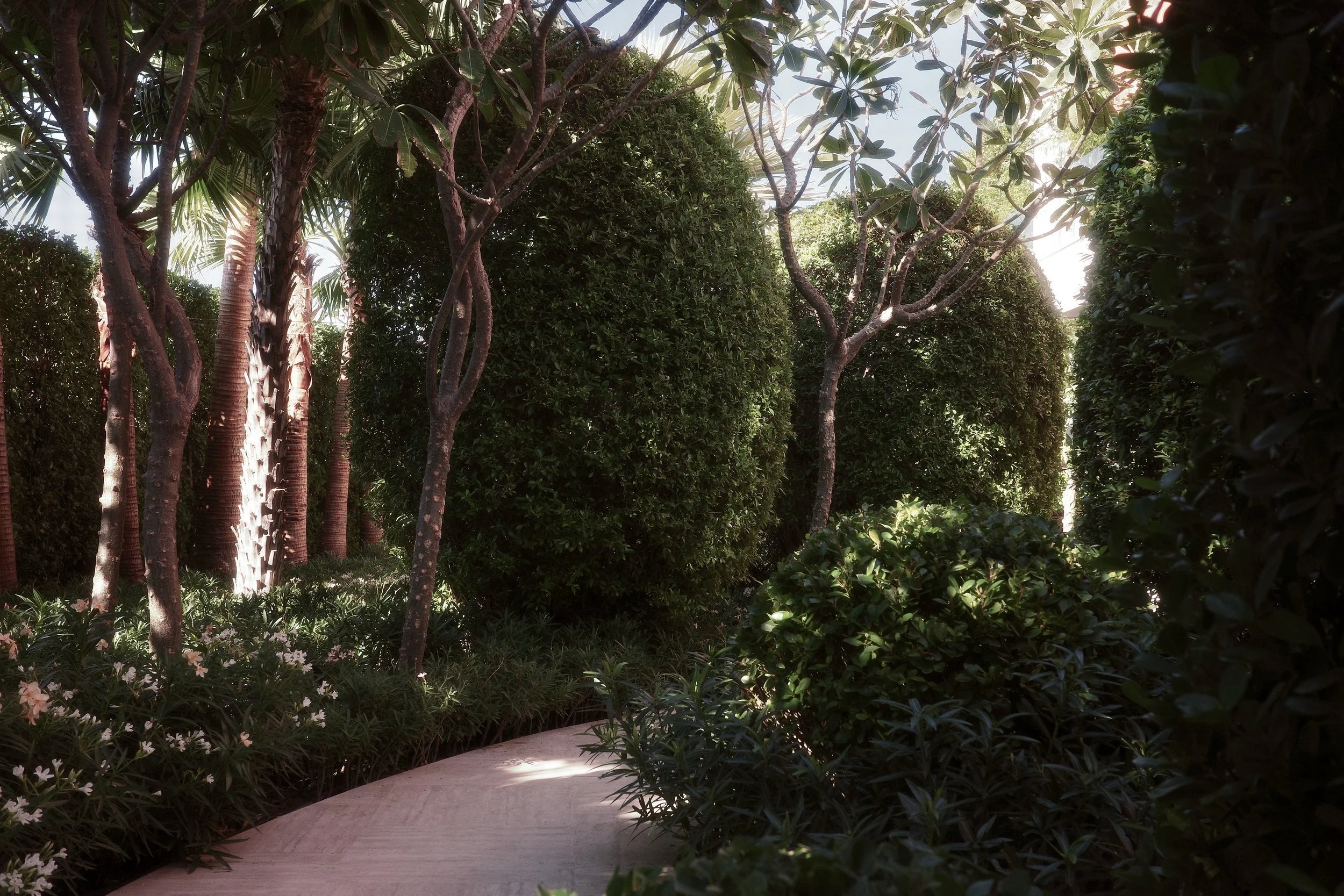
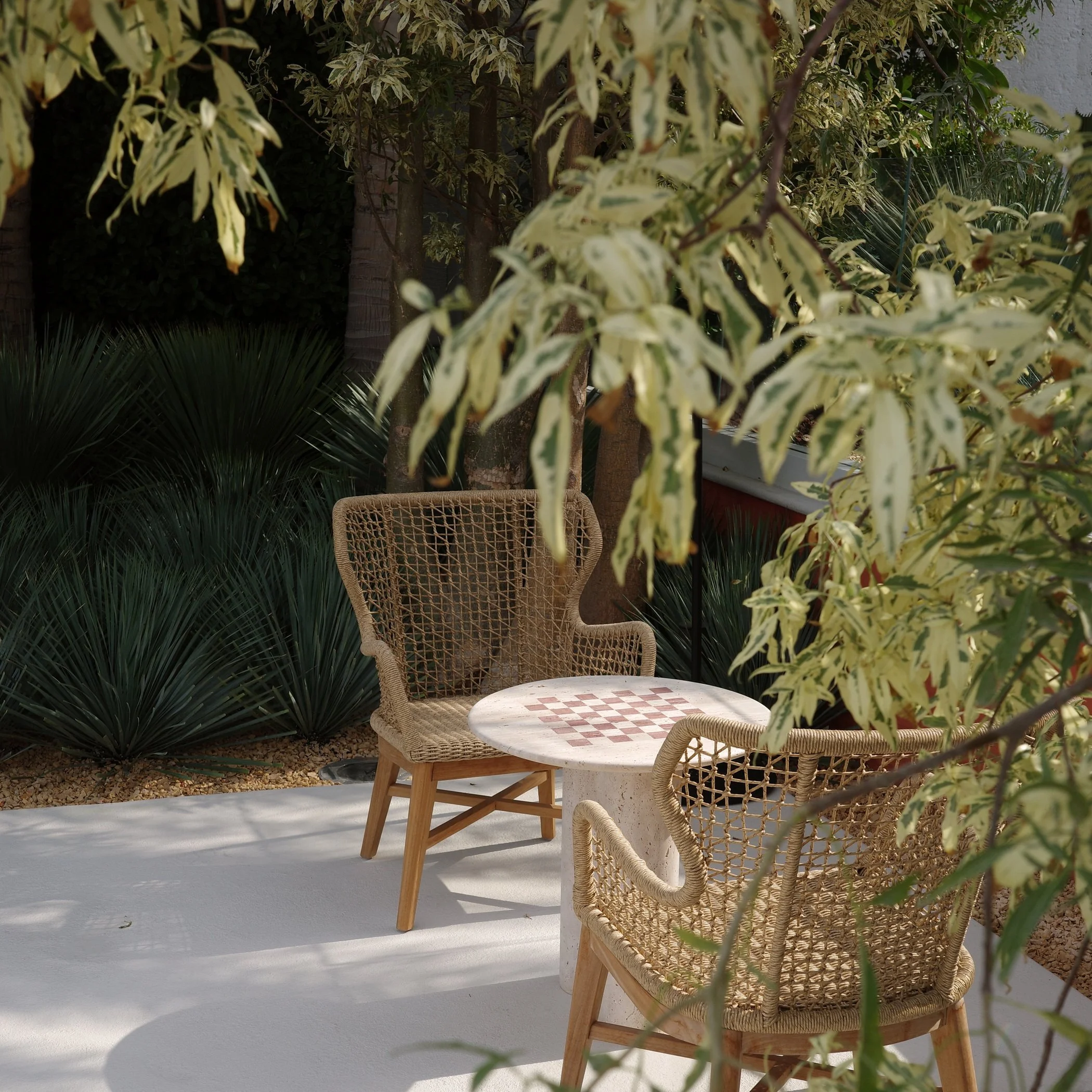
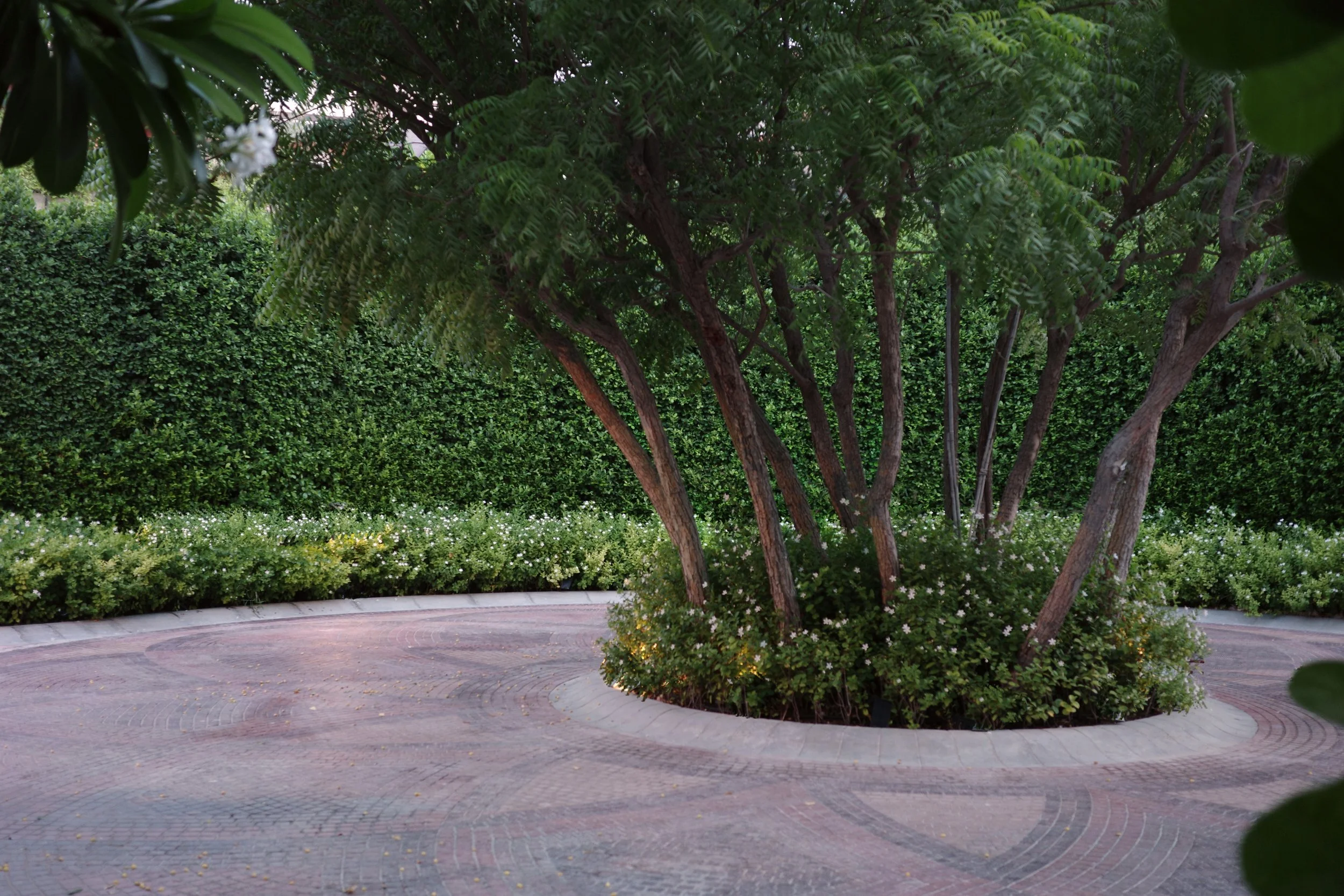
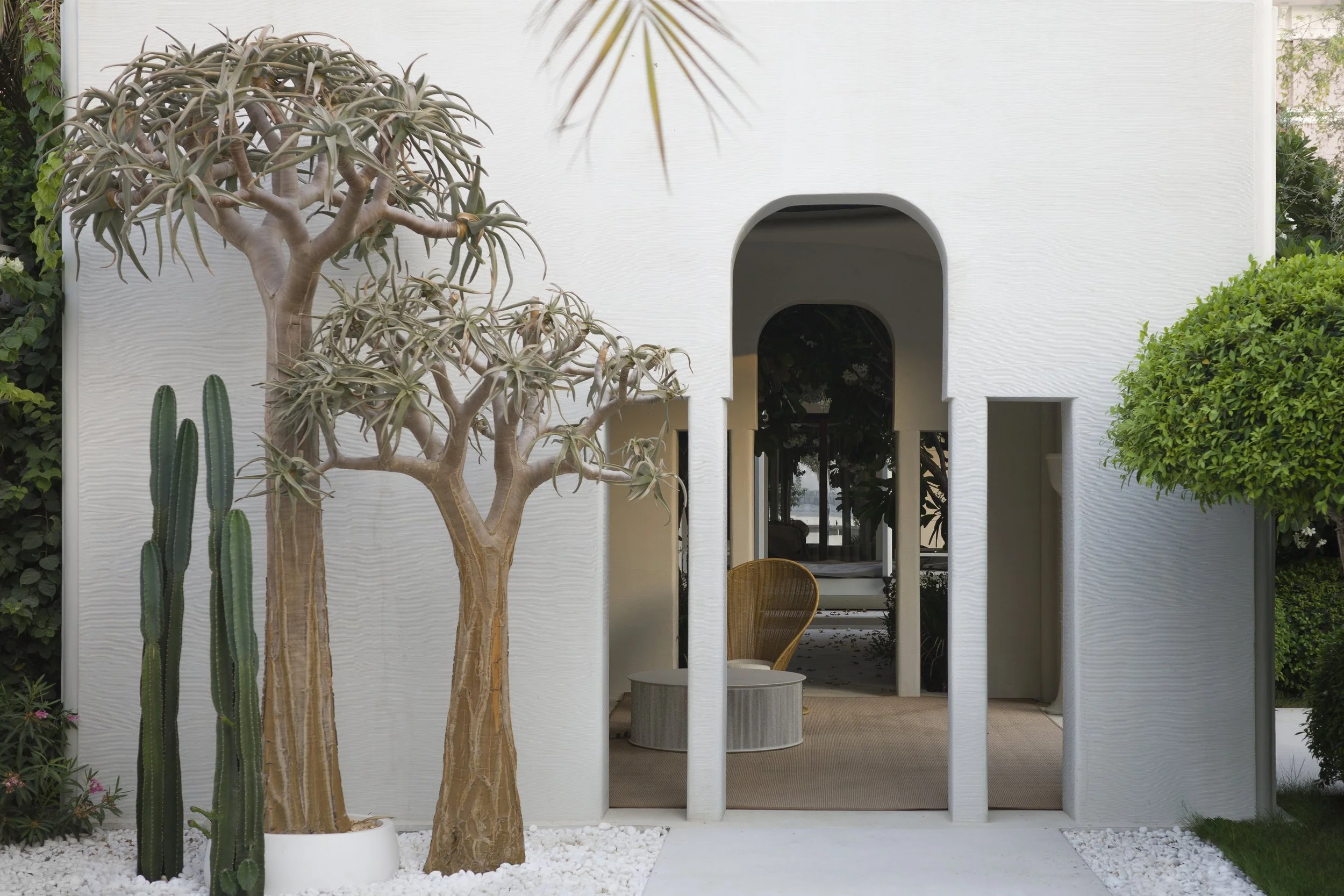
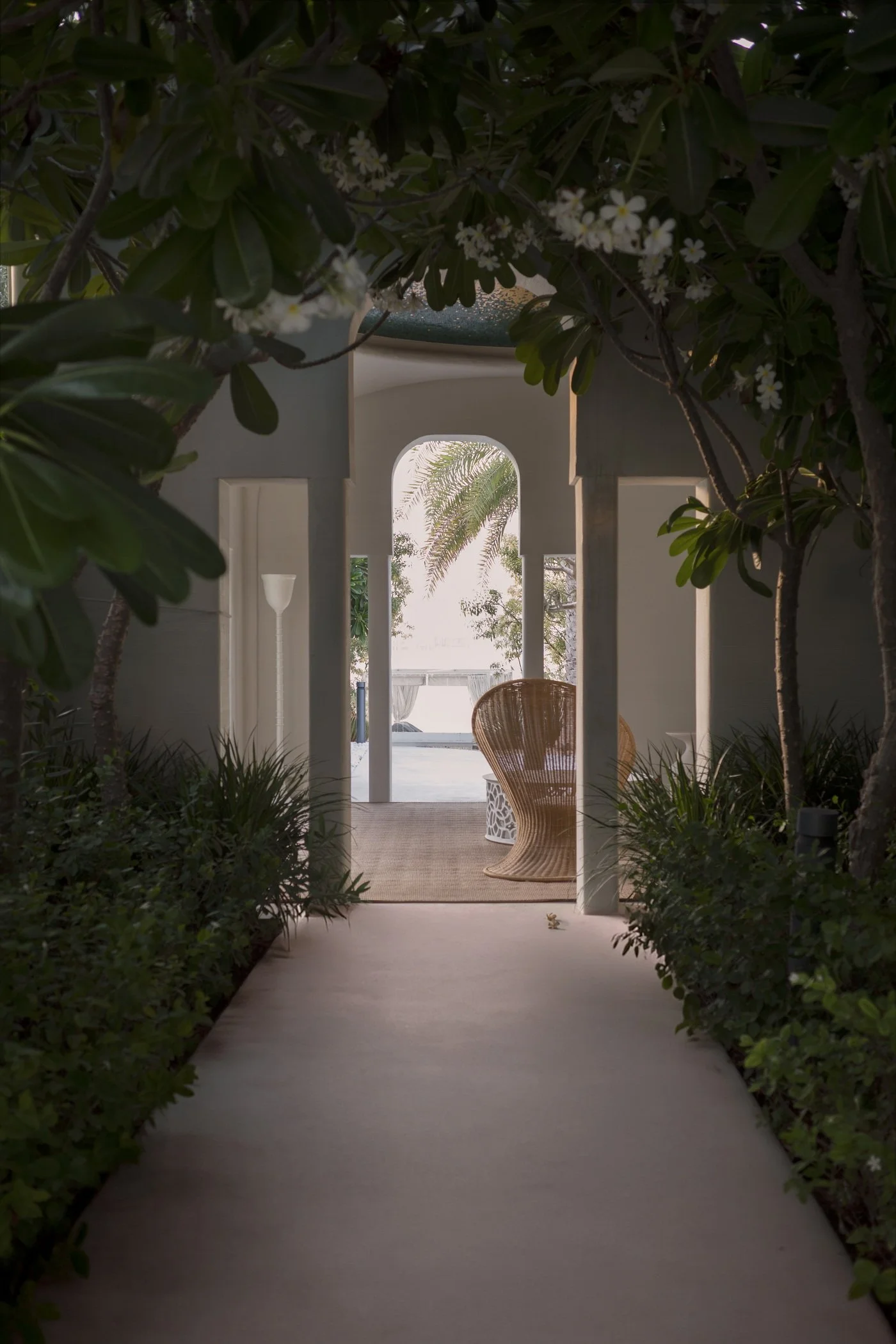
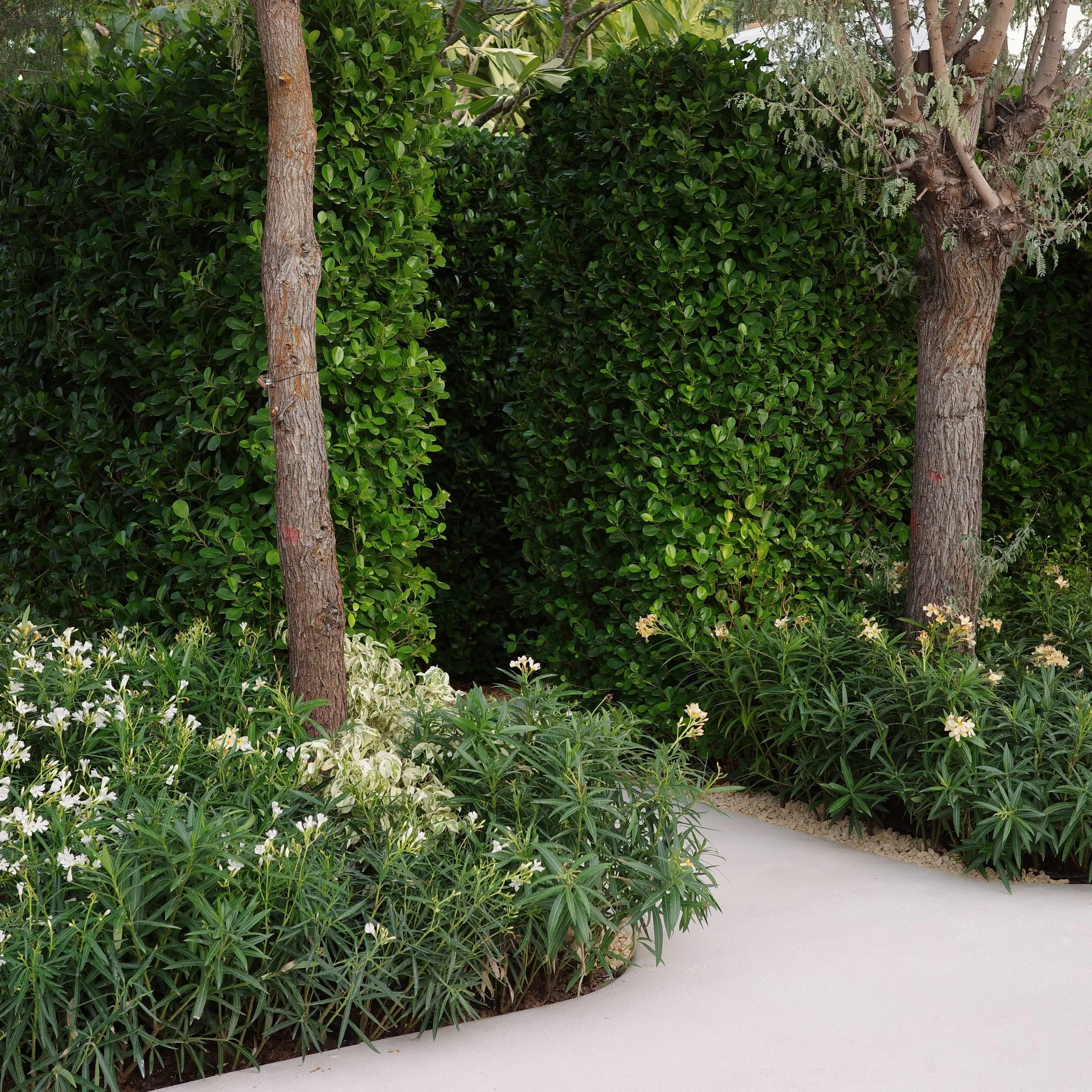
The garden offers a number of secluded places: a shaded corner for playing chess, pathways beneath the tree canopies, and an outdoor shower hidden within a labyrinth of clipped ficus. The garden pavilion is designed in a restrained, contemporary manner, with subtle references to Middle Eastern architecture. Against its white walls, the graphic silhouettes of cacti and aloe stand out clearly.
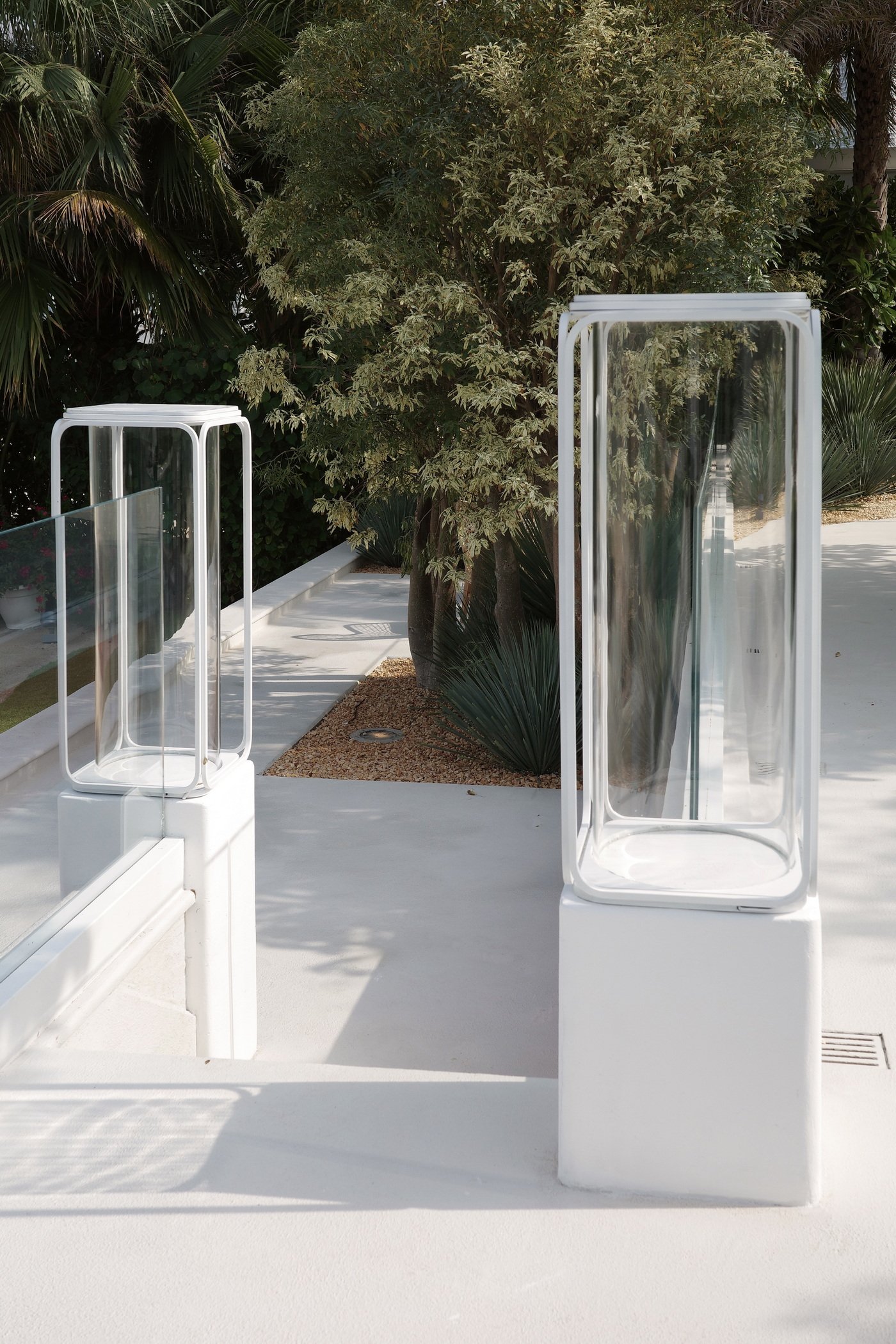
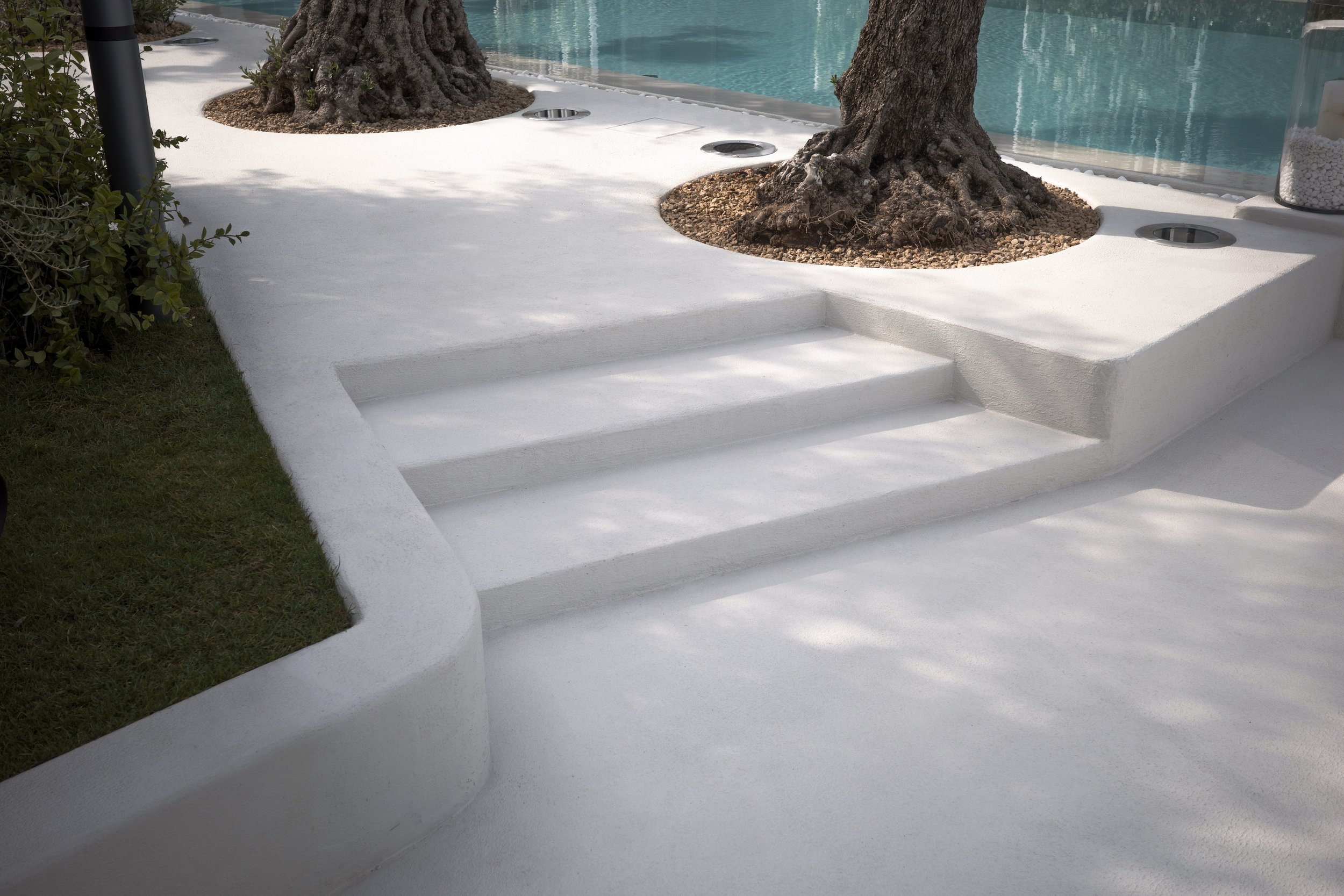
An important part of the composition is the interplay of freely growing, “wild” crowns, flowering lawns, and carefully shaped green volumes. All paths, stairs, and retaining walls are finished in seamless white microcement, preserving the clarity of lines and the visual integrity of the space. The small architectural elements refer to traditional silhouettes, yet are expressed in a restrained and contemporary way.
As a result, the garden becomes a private, layered landscape where changing routes and atmospheres become part of everyday experience.